
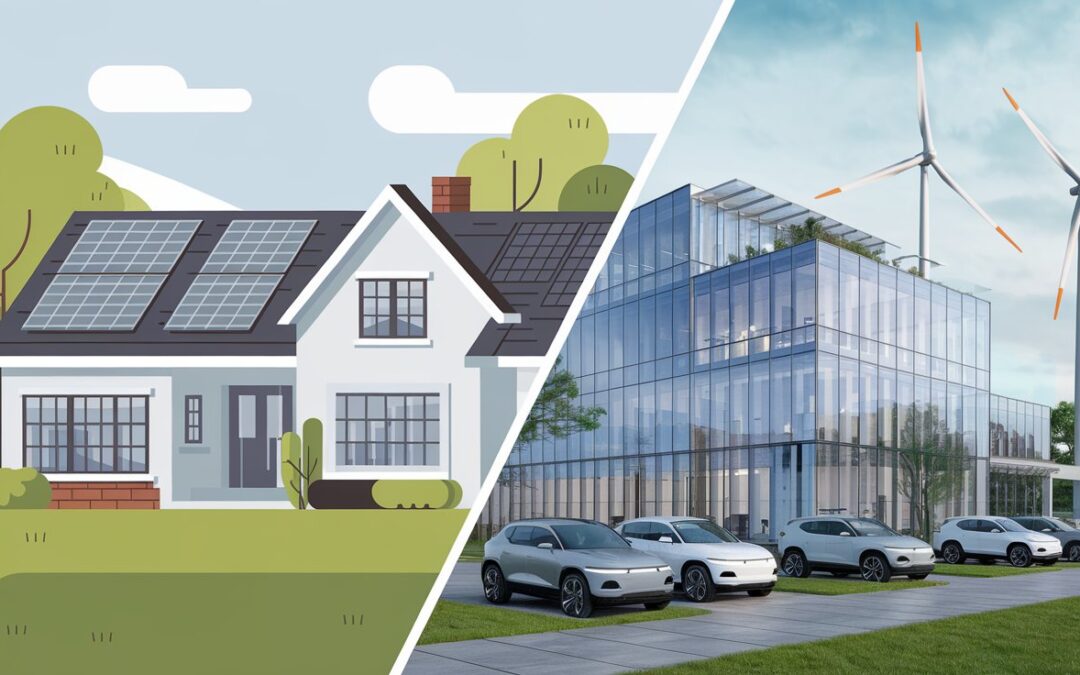
Sustainability isn’t just a trend—it’s becoming a financial strategy. Whether you’re an individual making upgrades to your home or a business owner investing in your operations, taking advantage of green incentives and “going green” can do more than reduce your environmental footprint. It can also reduce your tax bill.
The One Big Beautiful Bill Act (OBBBA), signed into law in 2025, made important changes to existing energy tax incentives. While it didn’t rewrite everything, it shortened timelines, clarified eligibility, and raised the stakes for acting sooner. That means there’s never been a better time to align financial planning with environmental responsibility.
In this article, we’ll break down the key opportunities for both individuals and businesses. If you’d like a broader overview of OBBBA and its tax changes, you can read our full article here.
Explore This Article:
Green Incentives for Individuals
Electric Vehicle (EV) Credits
Purchasing an electric vehicle has been one of the most visible ways individuals can capture tax savings. Federal tax credits for EVs remain in place, and under OBBBA, income limits and manufacturer caps were adjusted to broaden eligibility. Depending on your situation, you may qualify for:
- Up to $7,500 for new EVs
- A credit for certain used EV purchases
- Additional savings if your state offers its own rebate program
Residential Clean Energy Credit
If you’ve considered solar panels, geothermal heating, or home battery storage, 2025 may be the time to act. The Residential Clean Energy Credit covers up to 30% of qualified expenses. OBBBA clarified the phaseout timeline for certain technologies, providing homeowners with clearer planning horizons.
The Residential Clean Energy Credit still covers up to 30% of qualified expenses, but OBBBA introduced major changes:
- Earlier Expiration: The credit now only applies to property placed in service through December 31, 2025 (instead of stretching into the 2030s under prior law).
- Leasing Restrictions: OBBBA disallows the credit for leased equipment or power purchase agreements (PPAs), meaning homeowners must own the system directly to qualify.
- Clarity on Carryforwards: The credit remains nonrefundable, but unused amounts can still be carried forward — making tax planning crucial for high-cost projects.
Takeaway: If you’re considering solar or battery storage, waiting could mean missing out entirely.
Energy-Efficient Home Improvement Credit
Upgrades such as windows, doors, insulation, and HVAC systems still qualify for federal credits, and OBBBA temporarily raised certain annual limits. However, like the Residential Clean Energy Credit, this incentive terminates after December 31, 2025 under the new law.
Green Incentives for Businesses
Commercial Clean Energy Investments
Businesses that install clean energy property (such as solar, wind, or geothermal systems) have long been eligible for the Investment Tax Credit (ITC) or Production Tax Credit (PTC). OBBBA significantly accelerates the timeline:
- Expiration for Solar & Wind: Credits end for facilities placed in service after December 31, 2027.
- Begin Construction Safe Harbor: Projects that begin construction by July 4, 2026 may still qualify, even if completed later.
- Expanded Eligibility: OBBBA broadened eligibility for certain energy storage systems.
Domestic Rules Tightened: Stricter “foreign entity” restrictions now apply, requiring closer review of supply chains and ownership structures. See here for more details on OBBBA foreign entity and sourcing restrictions.
Implication: Businesses eyeing solar or wind installations should move quickly — the window for claiming credits is closing fast.
Clean Vehicle Fleets and Charging Stations
Transitioning company vehicles to electric is no small undertaking, but the tax code provides help. OBBBA increased thresholds for the Commercial Clean Vehicle Credit and extended incentives for installing EV charging stations, making the shift more financially feasible.
Accelerated Depreciation for Building Upgrades
Energy-efficient improvements to commercial buildings may qualify for accelerated depreciation, allowing businesses to recover costs faster. OBBBA clarified how certain qualified improvements should be treated and shortening the runway:
- Expiration Date: Deduction is no longer available for properties where construction begins after June 30, 2026.
- Depreciation Changes: OBBBA limits some accelerated depreciation options for new clean electricity or storage projects, though guidance is still forthcoming.
Implication: Companies planning energy efficiency retrofits should break ground before July 2026 to secure eligibility.
Why These Green Incentives Matter
The advantages go beyond tax savings. Both individuals and businesses can expect:
- Lower operating costs: From reduced energy bills to lower fuel expenses.
- Long-term value: Homes with energy-efficient upgrades often have higher resale values, while businesses may see enhanced brand reputation.
- Alignment with values: Sustainability resonates with customers, employees, and communities. OBBBA underscores this by linking tax relief directly to green initiatives.
Planning Considerations
As with any area of tax planning, timing and documentation matter to help you take advantage of green incentives.
- Paperwork: Energy certifications, receipts, and proof of installation may be required to substantiate your claims.
Effective dates: Many OBBBA provisions apply to tax years beginning 2025 – 2027, so proactive planning is key. - Income thresholds: Some credits phase out at higher Modified Adjusted Gross Income (MAGI) levels, so it’s important to check eligibility before making major purchases.
Green Incentives: The Bottom Line
Green investments are no longer just about environmental good — they’re about financial smartness, too. With OBBBA accelerating phaseouts and tightening eligibility, the window to maximize tax savings is shorter than many realize.
For both individuals and businesses, 2025 is the year to plan strategically. Whether it’s solar panels, EVs, or commercial building upgrades, acting sooner ensures you can still take advantage of these incentives before they disappear.
At Beckley & Associates PLLC, we help clients evaluate which green incentives apply and how they fit into a broader financial plan.
Disclaimer: This article is for informational purposes only and does not constitute legal or tax advice. Please consult with your tax advisor regarding your specific situation.